
Energy Efficient Window Coverings for Huntsville Homes and Businesses
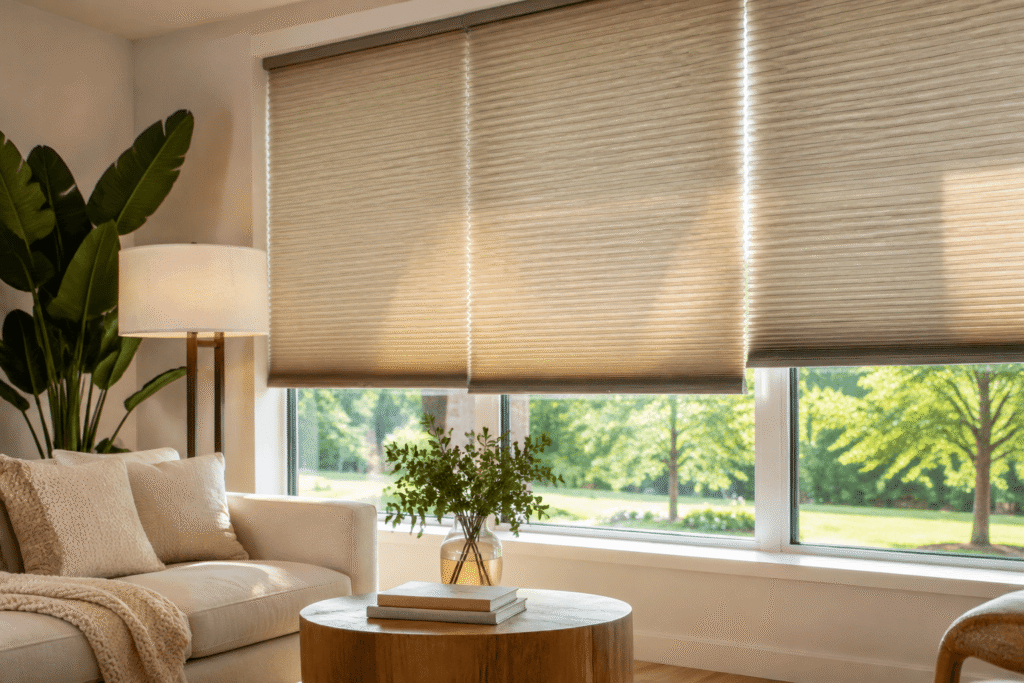
Energy Efficient Window Coverings for Huntsville Homes and Businesses | Bullish Blind Co Free Consultation & Quote: (256) 469-8638 Showroom: 143 Martin Rd SW Ste B, Huntsville, AL 35824 Blinds ⌄ Shades ⌄ Shutters ⌄ Drapery & Curtains ⌄ Automation ⌄ Services ⌄ Projects ⌄ About Us ⌄ Contact Us ENERGY EFFICIENT GUIDE Energy Efficient Window Coverings for Huntsville Homes and Businesses By Brad Fuller, Window Treatment Specialist • Last updated November 2026 SHARE Link copied! Quick answer: The most energy efficient window coverings for Huntsville are cellular shades, tightly fitted thermal drapes, and solar screens on sun-heavy glass, and the right pick depends mostly on which way the window faces. We are Bullish Blind Co, a Huntsville company that measures, builds, and installs window coverings for homes and businesses in Madison, Decatur, Athens, Florence, and across North Alabama. This guide covers what actually moves the needle on your cooling bill, where a cheaper option is good enough, and where it is not. Why Window Coverings Affect Your Energy Bills Glass is the weakest thermal point in most walls. In summer, sunlight passes through it and turns into heat inside the room. In winter, the glass becomes the coldest surface in the house and pulls warmth out of the room. Two numbers describe this. The U-factor tells you how easily heat flows through the window, and lower is better. The solar heat gain coefficient (SHGC) tells you how much of the sun’s energy gets through as heat, and lower is better in our climate. Both appear on the label that the National Fenestration Rating Council (NFRC) puts on rated windows. A covering does not change those labels, but it adds a second layer on top of them. Our climate makes this matter. North Alabama has hot, humid summers and a long cooling season, so your air conditioner runs for months. Winters are mild, but we get cold snaps that push the heating system hard for a few days. A good covering helps in both seasons. It blocks solar heat in July and slows heat loss in January. One honest caveat. The U.S. Department of Energy notes that shading works best when it stops the sun before it reaches the glass. An interior covering catches heat after it has already passed through, so it reduces gain rather than eliminating it. Exterior options and reflective backings do better on the hottest exposures. You can find more on window performance and ratings at ENERGY STAR. The Most Energy Efficient Window Coverings Here is how the main options compare. The cost ranges are rough installed prices per square meter of window in US dollars. Fabric, size, and motorization move them up or down. Type Insulation value Light control Best window location Typical cost range Cellular shades Highest of the group, better with double cells Light filtering to blackout Bedrooms, west and south windows, any room that needs both seasons covered $90 to $250 per m² Thermal drapes Moderate to high when lined and hung close Light filtering to blackout Living rooms, large windows, sliding doors $60 to $200 per m² Insulated roller shades Moderate Sheer to blackout Home offices, offices, clean modern spaces $100 to $280 per m² Solar screens Low insulation, strong sun rejection Reduces glare, keeps the view West and south glass, sunrooms, storefronts $40 to $120 per m² Woven woods Low Filtering, rarely full blackout Dining rooms, dens, spaces where looks come first $90 to $220 per m² Cellular Shades Cellular shades (also called honeycomb shades) are our usual first recommendation. Their folded cells trap a pocket of still air against the glass, and still air is a poor conductor of heat. Double-cell versions add a second pocket and perform better, though they cost more and stack a bit thicker when raised. They do have limits. They are less forgiving in very damp spaces like a bathroom with poor ventilation, and a light-colored fabric facing the sun will still let some heat through. Pick a reflective or darker-backed fabric for the hottest windows. Thermal Drapes Thermal drapes can be excellent when they are done right and mediocre when they are not. A lined panel hung close to the wall, wide enough to overlap the frame, works as a real barrier. A thin curtain on a rod set high above a gap does very little. If you want an energy efficient drapes window covering that also looks good in a living room, spend the money on the lining and the width. Solar Screens Solar screens are a mesh that blocks a large share of the sun’s energy while keeping your view. They are the cheaper option that is often good enough for a hot west-facing window that is not a bedroom. They do little for winter insulation, so think of them as a summer tool. What Custom Window Coverings Help the Most With Energy Efficiency Fit matters more than the material alone. A premium fabric with gaps around it can lose to an average fabric that seals well. Air moves around the edges of a covering. Warm air on the room side meets cold or hot glass, sinks or rises, and circulates through any gap. These light gaps around the frame (the thin lines of daylight you can see at the sides and top) are also gaps where heat and air travel. Closing them is where custom work pays off. That is why we measure to the millimeter. A good custom shade has these features: Exact width and drop: We usually keep the gap between the shade and the frame to a few millimeters. Side channels or tracks: These hold the edges of the shade close to the frame and stop air from slipping through. A proper headrail or valance: This closes the top, where warm air tends to escape. A tight inside mount or a generous outside mount: Which is better depends on how deep your window recess is. Example scenario: Picture a house in West Huntsville with a west-facing
Outdoor Shades for North Alabama Patios: Sun, Rain, Wind and Pollen
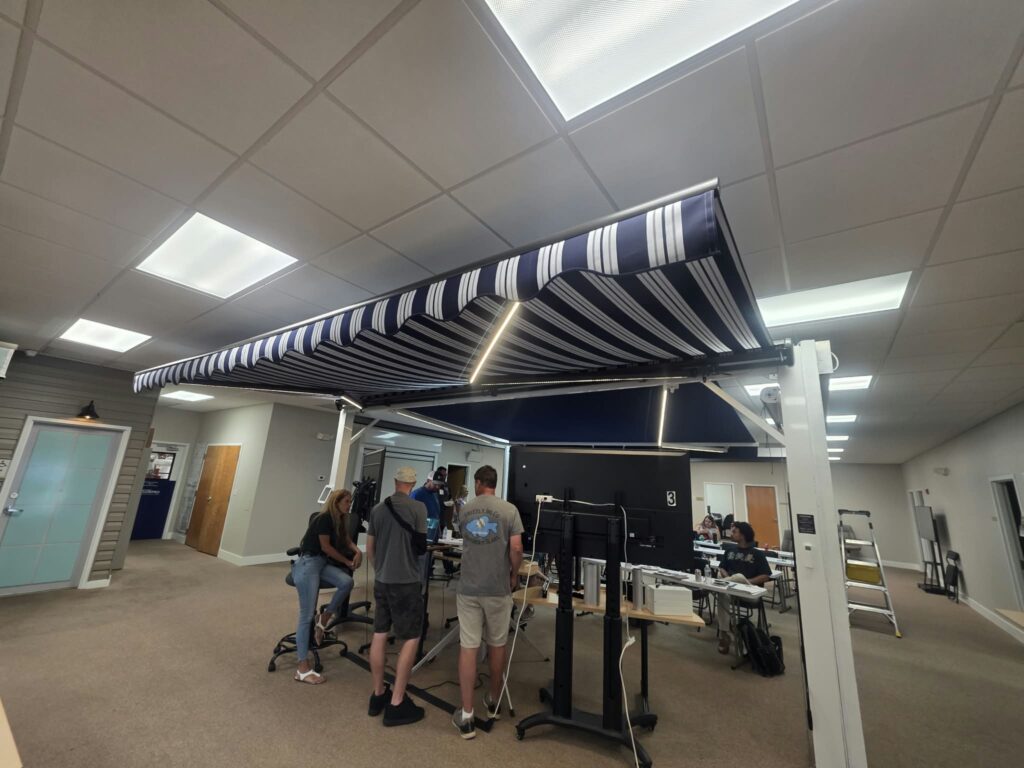
Outdoor Shades for North Alabama Patios: Sun, Rain, Wind and Pollen | Bullish Blind Co Free Consultation & Quote: (256) 469-8638 Showroom: 143 Martin Rd SW Ste B, Huntsville, AL 35824 Blinds ⌄ Shades ⌄ Shutters ⌄ Drapery & Curtains ⌄ Automation ⌄ Services ⌄ Projects ⌄ About Us ⌄ Contact Us OUTDOOR PATIO GUIDE Outdoor Shades for North Alabama Patios: Sun, Rain, Wind and Pollen By Brad Fuller, Owner of Bullish Blind Co • Last updated October 26, 2026 SHARE Link copied! Quick answer: The best outdoor patio shades in Alabama are exterior roller shades made with a solar fabric, usually 5% or 10% openness, mounted on a zip track or cable guide that holds up in wind. They cut sun and heat, keep your view, and make a patio usable from May through September. They are not a roof, so they will not keep you dry in a heavy rain. I’m Brad Fuller. I’ve spent more than 12 years measuring, building and installing window treatments across North Alabama, and outdoor shades are some of the jobs people notice the fastest. A west facing patio in Huntsville in July goes from a spot you avoid to a spot you actually sit in. This guide covers what I tell homeowners in Huntsville, Madison, Decatur, Athens and Cullman before they buy: which shade fits, what it can and cannot handle, and where people waste money. Why North Alabama patios need their own shade plan Our summers are long, humid and bright. Low afternoon sun from the west hits patios hard from late spring into September. Then you add pop up thunderstorms, gusty fronts, tornado season and a spring pollen season that turns everything yellow. A shade that works in a dry climate does not automatically work here. When I plan an outdoor shade, I plan for four things: sun, rain, wind and pollen. The rest of this guide takes them one at a time. What are the best outdoor patio shades for Alabama homes? Bullish Blind Co installs patio shades, exterior roller shades and outdoor covers for homes and businesses across North Alabama. Here is how the common options compare. I include awnings so you can see the difference, since homeowners ask me about them all the time. Option Best for Watch out for Exterior roller shade on zip track Covered patios, porches, pergolas and wind exposed spots Needs a solid mounting surface and a square opening Cable guided roller shade Lower cost projects with moderate wind The fabric moves more in gusts than it does on a zip track Fixed solar screen Screened porches and windows that need shade all day Cannot be raised for winter sun or before a storm Motorized outdoor shade Wide openings, hard to reach spots, smart home setups Needs a power plan: hardwired, battery or solar Retractable awning Extra overhang and some rain cover over a deck Low sun slides underneath, and the structure is larger For most patios I recommend, the zip track roller shade is the pick. It keeps the fabric flat, handles wind better, and looks clean when it is rolled up. Do outdoor shades keep a patio cooler? Yes, and the reason is simple. An exterior shade stops sunlight before it reaches your glass doors and your seating area. Once heat gets through glass, an interior blind can only manage what is already inside. The U.S. Department of Energy says exterior shading is more effective at reducing solar heat gain than interior treatments. It also estimates that awnings can cut summer solar heat gain by up to 65% on south facing windows and up to 77% on west facing windows. You can read the details on the Department of Energy’s window treatment page. Those numbers are for awnings, and real results change with fabric, color and where the shade sits. Treat them as proof the effect is strong, not as a promise for your exact patio. On a west facing patio, the late afternoon sun comes in low, which is the hardest angle for a roof overhang to block. A drop shade on the open side handles it. If your patio sits next to a sliding glass door, shading the outside also takes load off your air conditioner. How to choose openness and color Openness factor is the percentage of the fabric weave that is open. A 5% fabric lets about 5% of the light pass through. A 10% fabric lets through about twice that. 5% openness: blocks more heat, glare and UV, gives more daytime privacy, and feels a little darker under the shade. 10% openness: keeps the view clearer and the space brighter, but blocks less heat. Darker colors: cut glare and keep the view out of your patio crisp. Lighter colors: reflect more heat but make the view a bit hazier. For a hot west facing patio, I start the conversation at 5%. For a shaded east or north side where you want light and a good view, 10% is often plenty. The best way to decide is to hold fabric samples up outside at the time of day that bothers you, which is why I bring them to the patio. Can outdoor shades stay up in the rain? Mostly yes, but they are not rain protection. Outdoor solar fabrics are a woven mesh, usually vinyl coated polyester or fiberglass with a mildew resistant finish. Rain passes through the weave. The fabric handles getting wet and dries quickly, and in our humidity that mildew resistance matters. If you want to sit dry during a downpour, you need a roof, a waterproof awning or another covered structure. I tell customers this before they buy, because a shade sold as rain cover only leads to disappointment. On a covered porch or under a pergola roof, your shades will stay mostly dry anyway. How much wind can exterior shades handle? That depends on the system more than the fabric. A zip track holds both edges of the fabric inside a
Luxury Window Treatments in Huntsville, AL | Bullish Blind Co
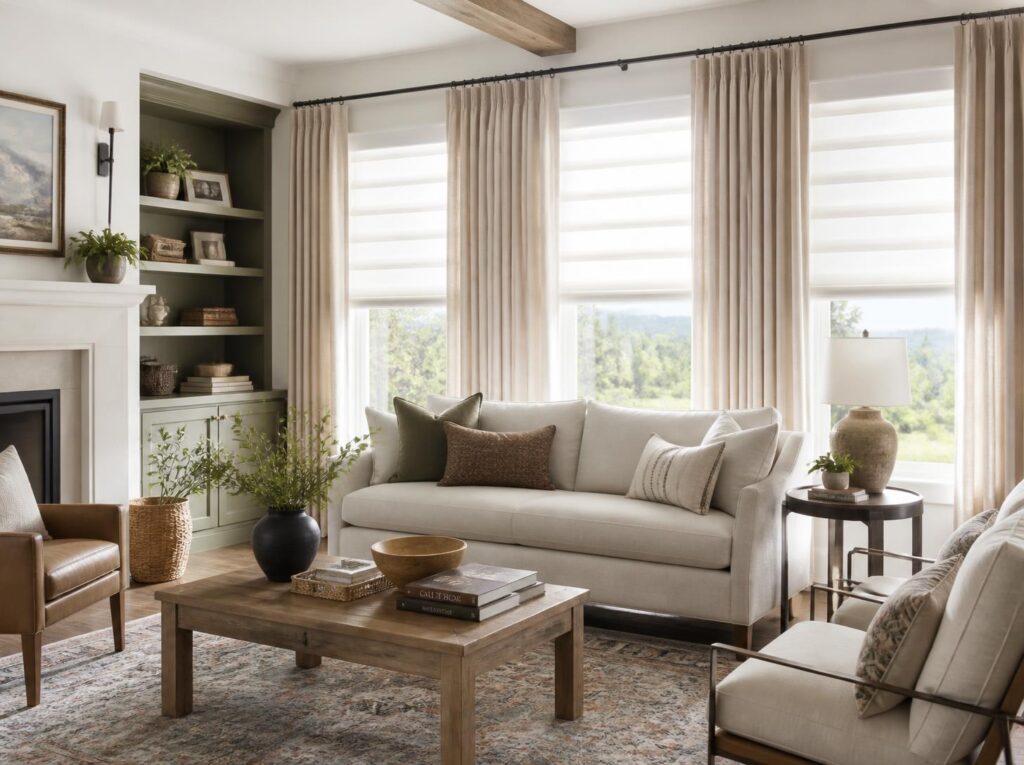
Free Consultation & Quote: (256) 469-8638 Showroom: 143 Martin Rd SW Ste B, Huntsville, AL 35824 Blinds ⌄ Shades ⌄ Shutters ⌄ Drapery & Curtains ⌄ Automation ⌄ Services ⌄ Projects ⌄ About Us ⌄ Contact Us DESIGN GUIDE How Interior Designers Choose Window Treatments: A Guide for North Alabama Homes By Brad Fuller • 9 min read SHARE Link copied! Interior designers treat window treatments as a core design element, not an afterthought. They use custom drapery, plantation shutters, roman shades, and motorized systems to control light, add texture, and reinforce a home’s architecture. Bullish Blind Co, led by Brad Fuller, brings this same design-first approach to homeowners across Huntsville and North Alabama, pairing measuring and installation expertise with real design guidance. Walk into any room a professional designer has touched, and your eye probably goes to the windows before you even realize why. That’s not an accident. Window treatments do more design work in a room than almost any other element, and most homeowners underestimate just how much. At Bullish Blind Co, we’ve spent more than 12 years measuring, designing, and installing window treatments across Huntsville, Madison, Decatur, Athens, and the rest of North Alabama. In that time, one pattern has held true: the homes that feel finished, the ones that photograph well and live even better, almost always have window treatments chosen with intention. This article breaks down how interior designers actually think about window treatments. We’ll cover light control, privacy, texture, and architecture, along with the specific products designers reach for again and again. Whether you’re planning a full renovation or just tired of the mismatched blinds you inherited from the previous owner, this should give you a clearer sense of what luxury actually looks like at the window. Quick answer: Interior designers use window treatments as foundational architectural elements to control natural light, add rich textures, enhance room height, and ensure complete privacy. By selecting custom drapery, Roman shades, or plantation shutters tailored to the room’s precise dimensions, they create spaces that feel cohesive, balanced, and timeless. Why Window Treatments Are Essential in Luxury Interior Design Luxury in interior design rarely comes from one dramatic gesture. It comes from a series of correct decisions that add up. Window treatments happen to touch almost every one of those decisions at once. Consider what a single window covering actually controls in a room: how much daylight enters, how private the space feels, how warm or cold the room reads visually, and how the eye moves across the wall. A generic mini blind pulled halfway up does none of these things well. A well-chosen roman shade or a properly fitted plantation shutter does all of them at once. Designers also know that windows are architectural features, whether the home is a 1960s brick ranch in Huntsville or a newer build in Madison. Window treatments either support that architecture or fight against it. A set of stock blinds cut slightly too short will always look slightly wrong, even if you can’t name why. Custom window treatments, sized and styled to the actual window and the actual room, close that gap. How Designers Use Window Treatments to Transform Spaces Professional designers rely on a handful of specific techniques to get window treatments working harder in a room. None of these require an unlimited budget. They require the right product, sized correctly, and installed with care. Creating height and larger-looking rooms: One of the simplest tricks in residential design is mounting drapery hardware closer to the ceiling than to the top of the window frame, then letting the panels run to the floor. This draws the eye upward and makes ceilings feel taller than they are. It’s a favorite in rooms with standard eight or nine foot ceilings, which describes a large share of homes across North Alabama. Controlling natural light with intention: Light control is not just about blocking the sun. Designers layer sheers, shades, and blinds to shape how light moves through a room at different times of day. A west-facing living room in Huntsville, for example, might need a solar shade to cut glare in the afternoon while a sheer panel softens the light in the morning. Adding texture and warmth: Hard surfaces dominate most modern homes: tile, quartz, hardwood, glass. Window treatments introduce fabric, weave, and softness that balance those surfaces. A woven wood shade or a linen drapery panel does more to warm up a room than almost any paint color. Improving privacy without sacrificing style: Ground floor windows, street-facing bedrooms, and homes on smaller lots all need privacy solutions that don’t look like an afterthought. Cellular shades, plantation shutters, and layered treatments solve this without the room feeling closed off. Matching architectural style: A craftsman-style home calls for different window treatments than a modern farmhouse or a traditional brick colonial. Designers pay close attention to trim profile, window shape, and the home’s overall character before recommending a style. This is one of the most overlooked parts of getting window treatments right. Luxury Window Treatment Styles Interior Designers Recommend Certain products come up again and again when designers talk about elevating a space. Here’s how each one earns its place. Custom Drapery Custom drapery remains one of the fastest ways to make a room feel designed rather than decorated. The benefit of going custom, instead of buying pre-made panels, comes down to fabric choice, length, and lining. Designers tend to favor natural fibers like linen and cotton blends for a relaxed, high-end look, while heavier fabrics like velvet or jacquard suit more formal rooms. Blackout or thermal lining adds function without changing the appearance from the front. The length matters more than most homeowners expect. Panels that puddle slightly on the floor read as luxurious. Panels that stop an inch above the floor read as a measuring mistake. We handle custom drapery for clients throughout Huntsville who want that tailored, made-for-the-room look rather than something ordered off a shelf. Plantation Shutters Plantation shutters have earned
Why Custom Window Treatments Are Better Than Store Bought Blinds
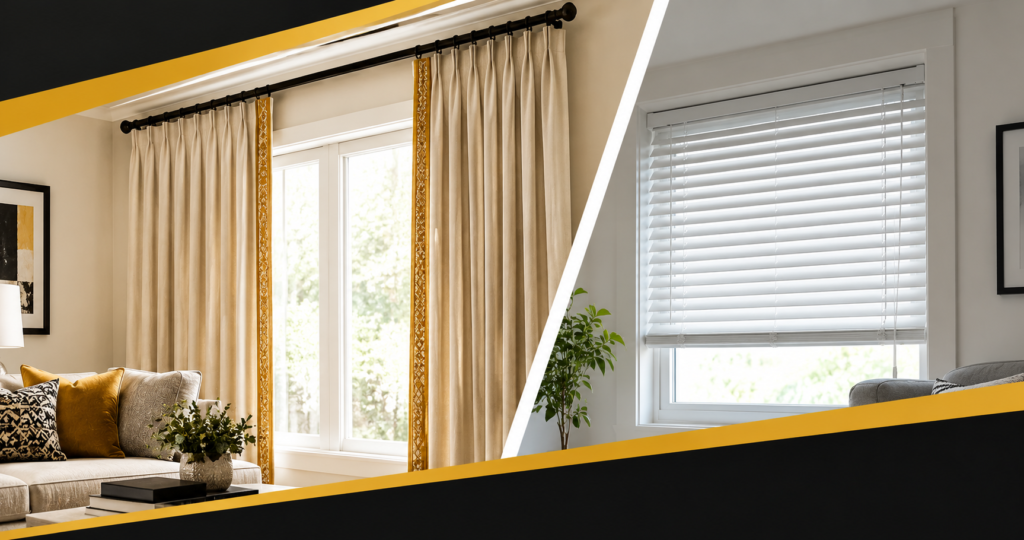
Free Consultation & Quote: (256) 469-8638 Showroom: 143 Martin Rd SW Ste B, Huntsville, AL 35824 Blinds ⌄ Shades ⌄ Shutters ⌄ Drapery & Curtains ⌄ Automation ⌄ Services ⌄ Projects ⌄ About Us ⌄ Contact Us COMPARISON GUIDE Custom Window Treatments vs Ready Made Blinds: Which Is Right for Your Home? By Brad Fuller • 8 min read SHARE Link copied! While ready made blinds may seem convenient, custom window treatments provide a better fit, improved appearance, longer durability, and professional installation that store bought options cannot match. If you are trying to decide between custom window treatments vs ready made blinds, the choice usually comes down to how long you plan to live in your home and how much the finished look actually matters to you. I am Brad Fuller, owner of Bullish Blind Co. I have spent over 12 years measuring, building, and installing window coverings in homes across Huntsville and the surrounding North Alabama area, and this is one of the questions I get asked the most. Homeowners walk into a big box store, see a wall of pre cut blinds at a low price, and wonder if paying more for something custom is really worth it. It is a fair question, and the honest answer depends on what you are trying to solve. Quick answer: Custom window treatments provide a better fit, appearance, and durability than ready made blinds, plus professional installation. Ready made blinds cost less upfront but are built to standard sizes only, which often leaves gaps or an uneven look on windows that are not a perfect standard size. For homeowners staying in their home long term, custom generally delivers better value over time. This article breaks down exactly how the two options compare, so you can make a decision that fits your home and your budget instead of just guessing. Custom Window Treatments vs Ready Made Blinds: A Side by Side Comparison Feature Ready Made Blinds Custom Window Treatments Fit Standard sizes only Exact measurements for your window Appearance Limited style and color options Designed to match your space Durability Average lifespan, lighter materials Higher quality materials built to last Installation Usually a DIY project Professional installation included Light control Basic, often leaves gaps Customized to your exact needs This table gives you the short version. The sections below explain why each of these differences actually matters once the product is hanging on your window. What Are Ready Made Blinds? Ready made blinds are mass produced in a limited set of standard sizes, then sold in stores or shipped after you enter a rough measurement online. They are built for the average window, not your specific window, which is exactly why they work fine in some situations and cause problems in others. They tend to work well in rental properties, temporary living situations, or rooms where appearance and precision are not a priority. A garage window or a workshop is a reasonable place for a basic ready made blind. Where they run into trouble is anywhere the window is slightly larger, slightly smaller, or an unusual shape, which describes a surprising number of homes here in North Alabama, especially older ones. When a blind does not match the window exactly, you end up with gaps around the edges, uneven light coming through, or a shade that has to be trimmed down and never quite sits right afterward. Why Custom Window Treatments Provide a Better Fit This is the biggest difference between the two options, and it is the one homeowners notice first once they see it in person. Professionally measured window treatments are built around the exact dimensions of your window, not a general size range. I measure every window myself at multiple points, because most window openings are not perfectly square, even in newer homes. A quarter inch difference between the top and bottom of a window frame is common, and a ready made blind has no way to account for that. Custom sizing solves the problems homeowners run into most often, including gaps of light along the edges, blinds that will not sit flush against the frame, and shades that bind or stick because the tolerances were never right to begin with. The result is a finished, clean appearance instead of something that looks slightly off, even if you cannot immediately explain why. Better Appearance and Home Design Ready made blinds are built to appeal to the widest possible audience, which means the color, material, and style options are limited on purpose. Custom window treatments are built around your home, not a warehouse average. That means matching the treatment to your existing trim color, your furniture, and the overall style of the room, whether that is a more traditional look with plantation shutters or a modern feel with clean lined roller shades. Premium materials also photograph and look noticeably better in person. Real wood, higher grade faux wood, and quality fabrics catch light differently than the thinner materials used in mass produced blinds, and it shows the moment you walk into the room. For homeowners who care about resale value or simply want their home to look put together, this difference alone often justifies the investment. Custom Window Treatments Offer Better Durability Ready made blinds are priced to be replaced, not repaired. The materials are typically thinner, the mechanisms are lighter duty, and daily use, especially in high traffic rooms, wears them down faster than most people expect. Custom window treatments are built with stronger components because they are made to be used for years, not replaced every season. Cords, mounting brackets, and tilt mechanisms are generally rated for heavier daily use, which matters in a household with kids, pets, or simply a lot of foot traffic through a room. Over a five to ten year span, many homeowners find that one properly built custom treatment ends up costing less than replacing a cheaper option two or three times over. Why Professional Measurement and Installation Matter This is
Common Window Treatment Mistakes Homeowners Make (And How I Fix Them)
Free Consultation & Quote: (256) 469-8638 Showroom: 143 Martin Rd SW Ste B, Huntsville, AL 35824 Blinds ⌄ Shades ⌄ Shutters ⌄ Drapery & Curtains ⌄ Automation ⌄ Services ⌄ Projects ⌄ About Us ⌄ Contact Us HOMEOWNER TIPS Common Window Treatment Mistakes Homeowners Make (And How I Fix Them) By Brad Fuller • 7 min read SHARE Link copied! I have installed window coverings in homes all across North Alabama for over 12 years, and I can tell you the same handful of mistakes show up again and again. Most of them are not the homeowner’s fault. Nobody teaches you how to buy blinds. You just find out you did it wrong when the shade does not fit the window or the light still pours in at seven in the morning. I am Brad Fuller, owner of Bullish Blind Co. I handle every job myself from the first measurement to the final install, no subcontractors, no crews you have never met showing up at your door. You can read more about my background and how I got started if you are curious. So when I say I have seen these mistakes hundreds of times in Huntsville, Madison, Decatur, Athens, Muscle Shoals, Florence, and Cullman, I mean it firsthand. Quick answer: The most common window treatment mistakes are measuring only the glass instead of the full window opening, choosing inside mount when outside mount would work better, assuming blackout fabric alone guarantees a dark room, picking a style before checking if the material fits the room, DIY installing shutters or motorized shades, ignoring furniture and foot traffic around the window, and ordering too close to a deadline. Nearly every one of these is prevented by a proper measurement and a short consultation before you order anything. Here are the mistakes I see most often, and what actually fixes them. Measuring the Window Instead of the Space You Want Covered This is the number one issue. People measure the glass, not the full window opening, and end up with blinds that leave a gap of light on both sides or shades that will not clear the trim. For an inside mount, you need the exact width at three points of the window (top, middle, and bottom) because older homes especially here in North Alabama are rarely perfectly square. For an outside mount, you need enough overlap past the frame, usually a few inches on each side, to actually block light and give you privacy. The fix is simple. Measure in three spots, use the smallest number for inside mounts, and if you are unsure, have someone measure for you before you order anything custom. Choosing Inside Mount When Outside Mount Was the Right Call Inside mount looks clean and tucks neatly into the frame, so most homeowners default to it without thinking it through. The problem shows up when there is not enough depth behind the trim, or when there is an obstruction like a window crank, an alarm sensor, or a deep sill that gets in the way. Outside mount is often the better choice when you want to make a small window look larger, when privacy matters more than a built in look, or when the window frame itself is not deep enough to hold the hardware properly. Before you decide, check the actual depth of your window frame, not just how you think it should look. Assuming Blackout Shades Automatically Mean Full Darkness Blackout fabric blocks light coming through the shade itself, but it does nothing about the light that sneaks in around the edges if the shade is not sized and mounted correctly. I have walked into plenty of bedrooms in Huntsville where someone bought blackout shades expecting total darkness and still had a bright line of light running down both sides of the window. If real darkness is the goal, you need side channels, a proper outside mount with enough overlap, or a valance that closes the gap at the top. The fabric matters, but the mount matters just as much. Picking a Style Based on a Picture Instead of the Room’s Actual Function A photo online can be misleading. A gorgeous drapery panel in someone else’s living room might be completely wrong for a humid Alabama bathroom or a kitchen window right above the sink where moisture and grease are a daily reality. Match the material to the room first, then worry about style. Faux wood or vinyl blinds hold up far better in bathrooms and kitchens than real wood. Drapery and softer fabrics work best in bedrooms and living rooms where moisture is not a daily concern. Plantation shutters are one of the few options that genuinely perform well almost anywhere in the house, which is part of why they have become so popular across North Alabama homes. Trying to Install Shutters or Motorized Shades as a DIY Project I understand the instinct to save money by installing things yourself, and for a basic mini blind, that can work fine. Plantation shutters and motorized shades are a different story. Shutters need the frame built and leveled precisely or the panels will not close evenly, and motorized shades involve wiring or hub setup that is easy to get wrong the first time. I have been called out to more than one home to fix a shutter frame that was slightly off level, which is a much bigger job than installing it correctly from the start. You can see examples of finished shutter and motorized shade installs across North Alabama in my project gallery. If you are investing in shutters or motorized shades, professional installation protects that investment. Forgetting to Plan for Furniture and Traffic Around the Window This one is easy to overlook. A long drapery panel looks beautiful until you realize it drags on top of a reading chair every time the wind hits it, or a wand control for your blinds hangs directly where a child’s crib will sit. Before you finalize
How Much Do Custom Blinds Cost in North Alabama
Free Consultation & Quote: (256) 469-8638 Showroom: 143 Martin Rd SW Ste B, Huntsville, AL 35824 Blinds ⌄ Shades ⌄ Shutters ⌄ Drapery & Curtains ⌄ Automation ⌄ Services ⌄ Projects ⌄ About Us ⌄ Contact Us PRICING GUIDE How Much Do Custom Blinds Cost in North Alabama By Brad Fuller • 6 min read SHARE Link copied! If you have started shopping for new blinds, you already know the price range is all over the place. A single window can run anywhere from fifty dollars to several hundred, and it depends on more than just the size of your glass. At Bullish Blind Co, we get this question almost every day from homeowners across Huntsville, Madison, Decatur, Athens, and the rest of North Alabama, so we put together a straightforward breakdown of what actually drives the cost of custom blinds and what you should expect to pay. Quick answer: Custom blinds in North Alabama typically run between $75 and $350 per window, depending on the material, size, and features. Aluminum and vinyl blinds sit at the lower end, faux wood blinds land in the middle, and real wood or motorized blinds sit at the top. Most full home projects with professional installation fall somewhere between $1,500 and $6,000, though smaller homes or single room projects can be much less. What Affects the Cost of Custom Blinds No two windows are exactly the same, and neither is the price. Here is what actually moves the number up or down. Window Size Bigger windows need more material and more labor to build and hang correctly. A standard bedroom window will always cost less than a large picture window or a set of sliding glass doors. Material This is usually the biggest factor. Aluminum and vinyl blinds are the most budget friendly option. Faux wood blinds cost more than vinyl but hold up better in humidity and sunlight, which matters a lot in Alabama summers. Real wood blinds sit at the top of the price range because of the material itself and the craftsmanship needed to finish them properly. Slat Size and Finish Wider slats generally cost a bit more than narrow ones, and custom paint or stain finishes add to the price as well. These are small details, but they change the final look of a room significantly. Motorization Remote and app controlled blinds cost more upfront because of the motor and wiring involved, but many homeowners find the convenience worth the investment, especially for hard to reach windows or large multi window rooms. Number of Windows Ordering blinds for an entire home almost always brings the per window price down compared to ordering one or two at a time, since measuring and installation labor gets spread across the whole project. Professional Measuring and Installation This is where a lot of homeowners get surprised. A company that measures your windows by hand and installs the finished product is going to charge more than a box store selling stock sizes off a shelf, but the fit and long term durability are not comparable. Custom built blinds installed by a professional crew last longer and function better than anything mass produced. Average Price Ranges by Blind Type Here is a general breakdown of what homeowners in the Huntsville area typically pay per window, including professional measuring and installation. Blind Type Price Per Window Aluminum blinds $75 – $150 Vinyl blinds $80 – $160 Faux wood blinds $130 – $250 Real wood blinds $180 – $350 Motorized blinds $250 – $500+ Keep in mind these are general ranges. The only way to get an accurate number for your home is a free in home consultation, since window count, size, and style choices all factor into a final quote. Custom Blinds vs Store Bought Blinds It is tempting to grab a set of blinds from a big box store and save some money upfront, but the comparison is not quite as simple as it looks. Store bought blinds come in fixed sizes, which means you are either trimming them down yourself or living with gaps and a less than perfect fit. Custom blinds are built to the exact measurements of your window, which means better light control, better privacy, and a finished look that actually matches the rest of your home. There is also the installation itself. A stock blind you install yourself can end up crooked, loose, or damaged during a DIY attempt. When a local company measures and installs your blinds, you get a warranty, a finished product built for your exact window, and someone to call if anything ever needs adjusting. For most homeowners, the extra cost of custom blinds pays for itself in how much longer they last and how much better they actually work. Why Local Installation Changes the Value At Bullish Blind Co, we do not use subcontractors and we do not sell products we did not measure ourselves. Every project starts with a free in home consultation where we look at your windows, talk through what you actually need, whether that is light control, privacy, energy savings, or just a fresh look, and then we measure every window by hand before anything is ordered. Because our own team builds and installs everything, there is no guesswork about fit and no middleman to call if something needs attention after the fact.Brad Fuller, the owner of Bullish Blind Co, has over 12 years of experience helping homeowners across Huntsville, Madison, Decatur, Muscle Shoals, and the surrounding North Alabama communities find the right window treatments for their space and their budget. You can see examples of this work on our recent projects page, where we showcase completed installations from homes and businesses across North Alabama. Frequently Asked Questions How much does it cost to install blinds in Huntsville, AL?+ Installation cost depends on the number of windows and the type of blinds chosen, but most homeowners in the Huntsville area pay between $75 and $350 per window when measuring and